By Serkan Dinç – 2025
In the last two decades, museums have transformed from quiet cultural institutions into monumental stages—architectural spectacles designed not merely to house art but to announce themselves as landmarks of national prestige. This shift is often celebrated as a sign of cultural investment. Yet beneath the enthusiasm lies a slow-burning dilemma: What happens when the museum becomes more important than the art it displays?
This is not a new question, but it has acquired new urgency. As museums expand their buildings and budgets, they also expand their need for attention. Visibility becomes currency. Architectural scale becomes branding. Experience design overtakes contemplation. And in this spectacle-driven environment, the artwork—once the beating heart of the museum—risks becoming a supporting actor, overshadowed by swarming audiences, photogenic interiors, and hyper-curated institutional narratives.
To grasp the depth of this shift, we have to rethink what a museum historically was. In the classical sense, a museum was a vessel for intimacy. It was a site for slow looking, for solitude, for the subtle exchange between viewer and artwork. The walls were neutral; the architecture withdrew so that the viewer could advance. But the 21st-century museum no longer withdraws. It performs.
Buildings like the Guggenheim Bilbao, the Louvre Abu Dhabi, the Broad, and the expansion of Tate Modern demonstrate a trend toward “signature architecture”—structures meant to be photographed, circulated, and consumed. Visitors today often spend more time capturing the building than engaging with the art. And this shift is not an accident; it is by design. Modern museums are built not only to protect art but to produce a “museum experience”—an immersive, audiovisual, brand-driven journey intended to generate social currency.
This transformation raises a deeper cultural question: Has the museum become a competitor to the art it contains?
The architecture demands attention through its scale, its drama, its monumental presence. As the building becomes iconic, the artwork becomes contextual. The relationship reverses: the architecture is the main narrative, and the artworks are episodes within it.
This dynamic mirrors a broader societal turn. In an era driven by images, the museum no longer expects visitors to look; it expects them to share. The value of the experience lies in its reproducibility. And reproducibility, by nature, privileges surfaces over depths.
The tragedy is subtle: we lose the ability to encounter art in silence.
Silence is not the absence of sound; it is the absence of distraction. It is the mental space required for seeing, for interpreting, for being transformed. When the museum becomes an environment of constant sensory stimulation—audiovisual rooms, animated projections, interactive installations—the contemplative dimension of art diminishes.
Many museums now curate exhibitions based on crowd flow, photo opportunities, and “Instagram-ready moments.” The art becomes choreography. The visitor becomes performer. And the museum becomes stage.
But we must ask:
What kind of cultural value is produced when art becomes subordinate to spectacle?
In this shift, something fundamental is lost: the artwork’s ability to resist.
Art has historically possessed a unique power: it interrupts. It slows. It unsettles. It demands from the viewer a kind of ethical attention—an openness to being affected. In spectacle-driven institutions, this power is neutralized. The viewer is guided, directed, managed. Lighting dictates how the artwork should be felt. Curatorial texts impose interpretive templates. The architecture scripts the emotional arc of the visit. Autonomy dissolves into choreography.
In other words:
The museum no longer invites experience; it delivers it.
This distinction is crucial. An invitation preserves freedom; a delivery ensures compliance. When art is delivered as experience, it functions like a product. Its complexity is reduced in order to maintain accessibility. Ambiguity becomes a liability. Questions become distractions. Meaning must be clear, immediate, consumable.
But true art is rarely immediate. It unfolds slowly. It deepens with time. It resists clarity. It refuses to be consumed.
The modern museum, however, cannot afford slowness. Its economic model depends on visitorship, on circulation, on attracting crowds large enough to sustain multimillion-dollar institutions. And crowds require spectacle. Spectacle requires scale. Scale requires architecture.
Thus the tension:
Museums must choose between being guardians of art and engines of entertainment.
This dilemma is not merely aesthetic; it is political. When museums prioritize spectacle, they adopt the logic of capitalism: maximize attention, maximize foot traffic, maximize consumption. Art becomes an accessory in a larger machine of cultural production.
This is why contemporary audiences often spend more time in immersive rooms than with paintings. Immersion is easier than interpretation. It requires less vulnerability. Less introspection. Less willingness to be changed.
Yet the danger is subtle.
When art loses its capacity to demand attention, the viewer loses the capacity to give it.
The museum becomes a training ground for superficial engagement.
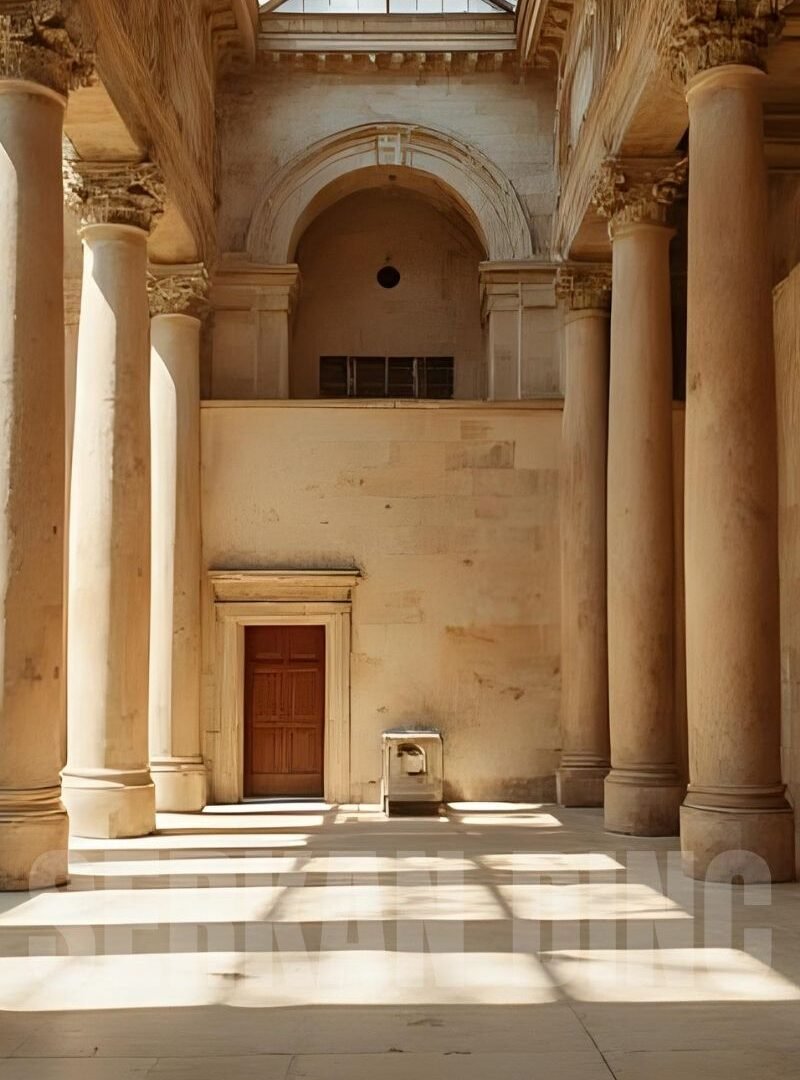
But does this mean the future of museums is bleak? Not necessarily. It simply means that museums must rethink their priorities. Architecture should serve as a frame, not a spectacle. Exhibition design should facilitate contemplation, not overwhelm it. Curatorial strategies should protect the artwork’s ambiguity rather than pre-explain it. And digital culture—though impossible to ignore—should not dictate the rhythm of the museum.
The most radical thing a museum can do today is create space for slowness.
Slowness is not inefficiency; it is depth.
Slowness allows the viewer to encounter themselves, not just the artwork.
Slowness restores the ethical dimension of looking.
A museum that values slowness becomes a counterforce to the acceleration of contemporary life. It becomes a sanctuary rather than a spectacle. It becomes a site of inner transformation rather than visual consumption.
Perhaps the future of the museum will depend not on how much it builds outward but how much it clears inward—how much emptiness it dares to protect. In a world drowning in images, the museum must become a space where seeing is sacred again.
The architecture will always matter. But it must matter less than the art.
Because art, unlike architecture, does not aim to be monumental.
Its aim is far more dangerous:
to change the human being who stands before it.

Serkan Dinç
Ceramic artist and production technician sharing insights from the studio.